Jaffna Public Library: Why This Building Means So Much to Locals

Isla Morgan
Safari Writer
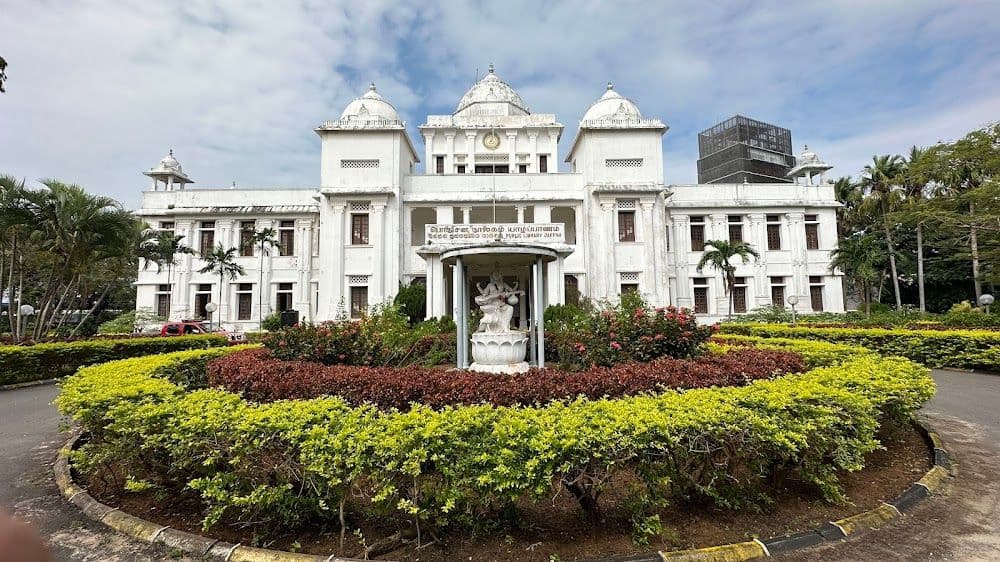
In most cities, a library is just a place to borrow books. In Jaffna, the Public Library is a monument. It is a symbol of culture, a memorial of tragedy, and a beacon of resilience.
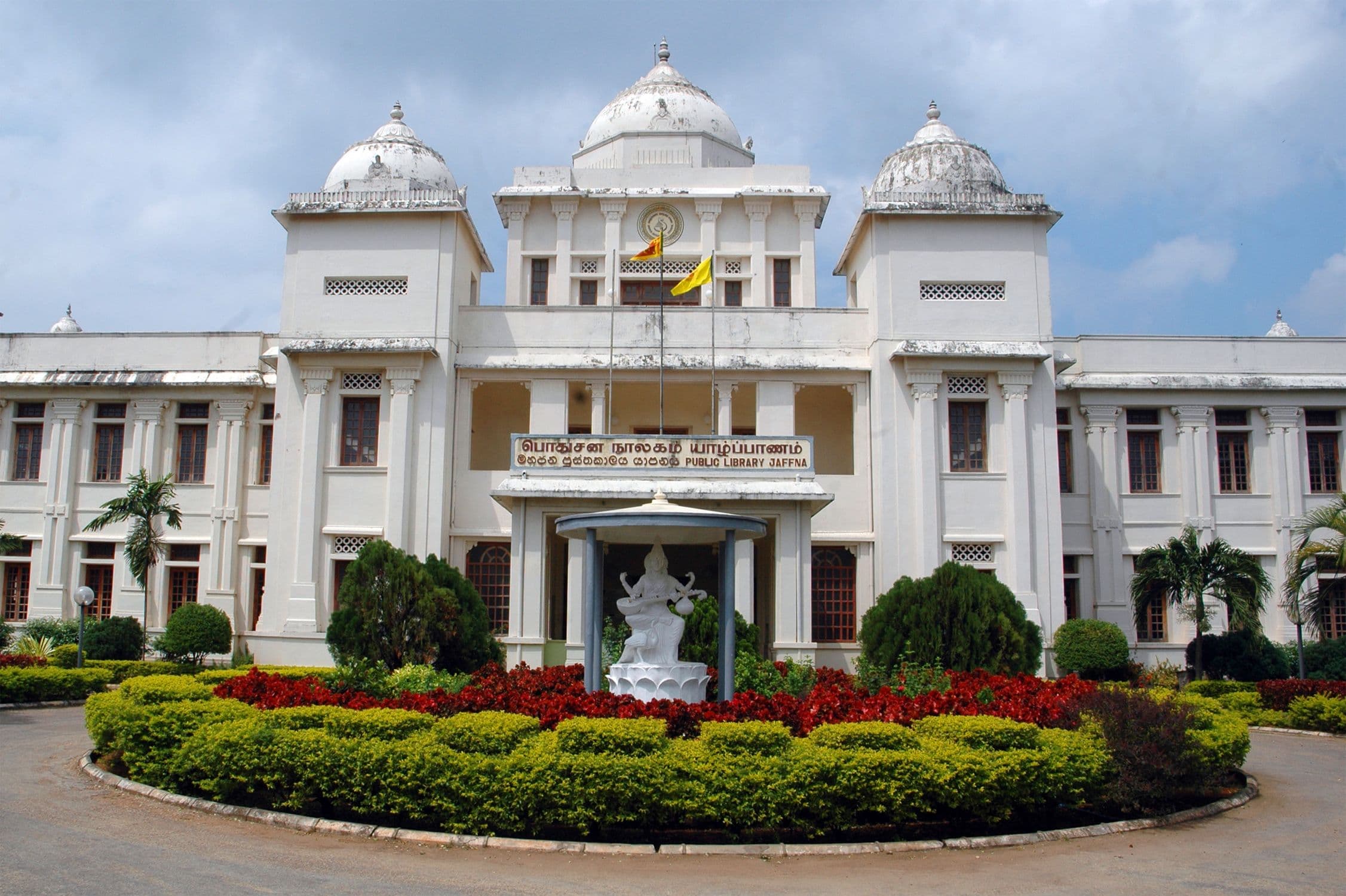
You cannot visit Jaffna without seeing it. Its gleaming white domes are visible from the Fort, the lagoon, and the city center. It is widely considered one of the finest examples of traditional Dravidian architecture in the region. But to understand why locals treat this building with such reverence, you have to understand what happened here.
A History of Fire
In the 1970s, this wasn't just a local library; it was one of the largest in Asia. It housed over 97,000 books and manuscripts, including irreplaceable ancient texts written on palm leaves. It was the intellectual heart of the Tamil people.
In 1981, during a night of political unrest, the library was set on fire. The blaze destroyed the building and incinerated the collection. It was a cultural tragedy that left a deep scar on the community.
However, the building you see today is a phoenix. It was lovingly reconstructed in the early 2000s to mirror the original design perfectly. When you walk through its halls, you are walking through a space that refused to die.
The Architecture: A Dravidian Masterpiece
Even without the history, the building is stunning. It follows the Indo-Saracenic style but is heavily influenced by traditional Hindu temple architecture (Dravidian style).
Look at the details:
- The Domes: The roofline is dominated by white, onion-shaped domes that give it a regal, palace-like appearance.
- The Columns: The long verandas are supported by ornate columns that provide shade and breeze essential in the Jaffna heat.
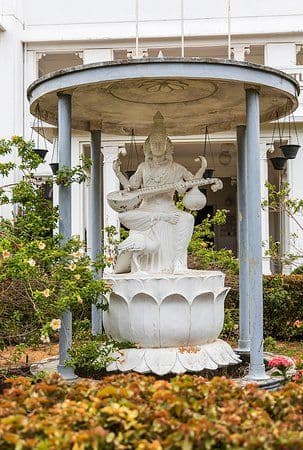
- The Symbolism: In the center, you will often find a statue or shrine to Saraswathi, the Hindu goddess of knowledge, music, and art. She watches over the building, reminding visitors that this is a sacred space for learning.
Visiting the Interior
Unlike a museum, this is a functioning library. Students come here to study for exams; elders come to read the newspapers.
Because of this, tourism is carefully managed. You are generally allowed to enter the lobby and the main sections to admire the architecture, but you must be silent. The interior is cool, airy, and filled with the smell of old paper and polished wood. The spiraling staircases and the high ceilings are incredibly photogenic, but remember to keep your voice down.
The Gardens
If the library interior is for silence, the gardens are for relaxing. The grounds surrounding the library are beautifully maintained. In the late afternoon, you will see families and students sitting on the grass, enjoying the breeze from the nearby lagoon. It is a peaceful spot to take a break from the dusty streets of the town.
Realistic Tips for Travelers
- Visiting Hours: The library has specific hours for "visitors" (tourists) versus "members." generally, late afternoon (around 4:30 PM to 6:00 PM) is a good time to visit, but check the sign at the gate for current rules.
- Dress Code: While not as strict as a temple, this is a place of respect. Avoid wearing beachwear or overly revealing clothes.
- Footwear: You must remove your shoes before entering the building. There is a counter at the entrance to leave them.
- Photography: You can take photos of the exterior and the garden freely. Inside, photography might be restricted or require a small ticket/permission fee. Always ask the security guard at the desk first.
Why You Should Visit
You don't need to check out a book to appreciate the Jaffna Public Library. Just standing in front of it is a lesson in history. It stands as a reminder that buildings can be burned, but the thirst for knowledge cannot be destroyed. It is the proudest landmark in the North.
Enjoyed this story? Share it
About the Author
Isla Morgan
A passionate cultural explorer and travel storyteller dedicated to uncovering the grand temple festivals, historic heritage sites, serene island landscapes, and the vibrant spirit of Jaffna — the jewel of Sri Lanka's northern coastline.