Road Trip to Point Pedro: Standing at the Edge of Sri Lanka

Tharushi Amarasinghe
Safari Writer
There is something universally satisfying about reaching the end of a map. If you travel to Dondra Head, you are at the southernmost tip of Sri Lanka. But if you drive north past the lagoons, past the palmyra groves, and through the dusty heat you reach Point Pedro.
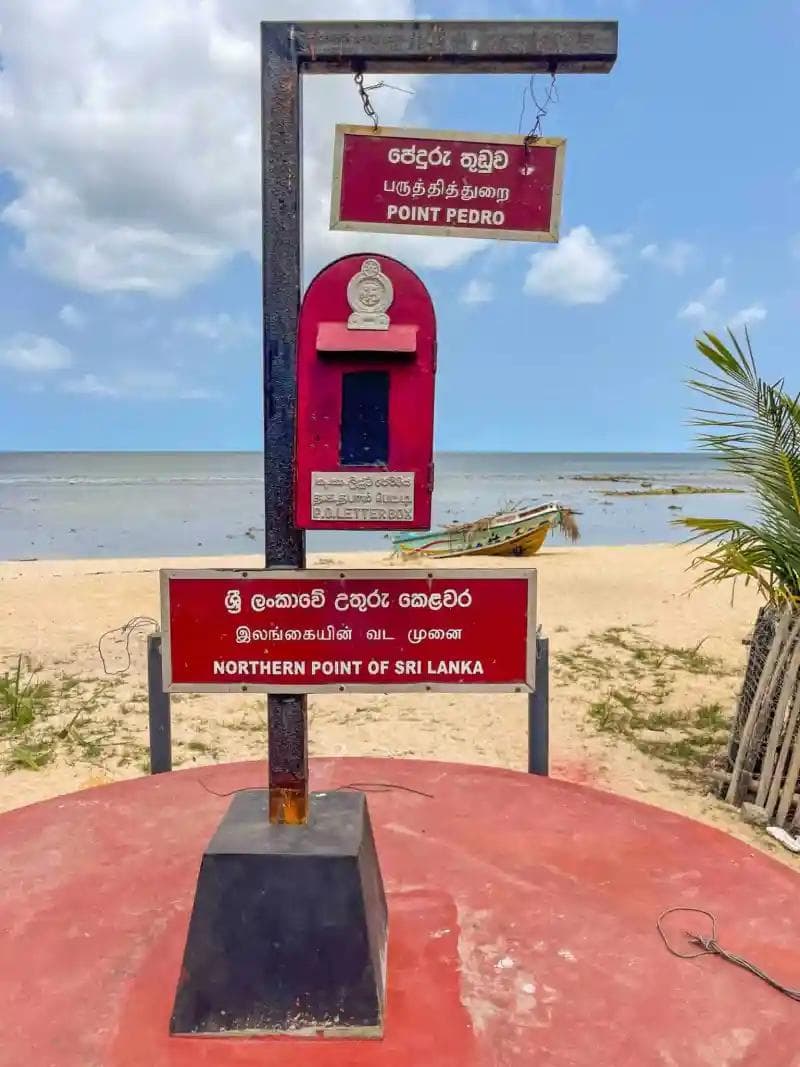
Standing here, at the Sakkotai Cape, you are at the northernmost point of the island. Beyond this rocky ledge, there is nothing but the Palk Strait and, just a few dozen kilometers away, the coast of India. It is a bucket-list moment for any traveler completing the full tour of Sri Lanka.
The Real Spot: Sakkotai Cape
There is often some confusion about where the actual "point" is. Many travelers drive to the Point Pedro Lighthouse and think they have arrived.
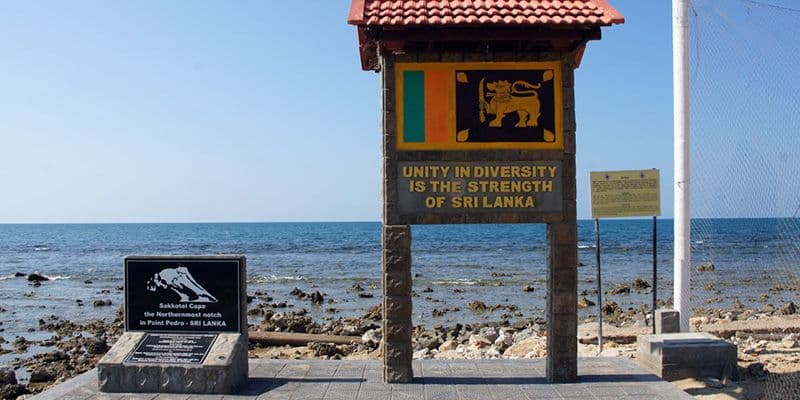
However, the true geographical tip is a spot called Sakkotai Cape. It is marked by a large, rectangular concrete sign painted with the Sri Lankan flag and the coordinates.
It is not a developed tourist attraction. There are no ticket counters, no cafes, and no souvenir shops. It is just you, the sign, and the ocean. The coastline here is rough and rocky, formed by ancient coral reefs jutting out into the sea. The wind is fierce, blowing uninterrupted from the ocean, carrying the smell of salt and dried fish.
The Lighthouse
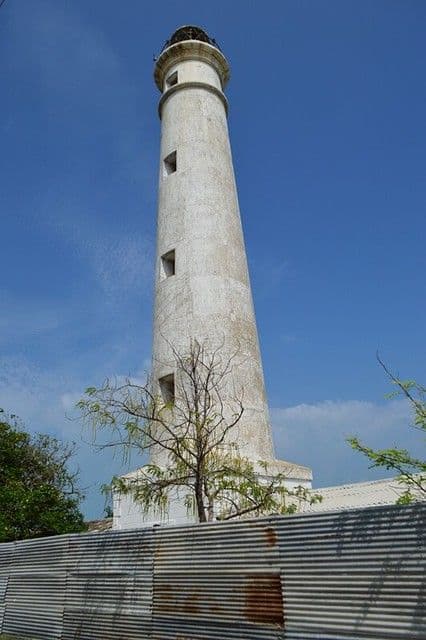
A short drive from the cape is the Point Pedro Lighthouse. Built in 1916, this white tower is a classic piece of colonial navigation history.
However, unlike the Dondra lighthouse in the south, this one is currently situated within a naval restricted zone. This means you generally cannot climb it or even walk right up to the base. You have to admire it from the road behind the fence. Despite the restrictions, it is still a beautiful sight and makes for a great photo against the stark blue sky.
The Drive: Manalkadu Desert
The journey to Point Pedro is just as interesting as the destination. If you take the coastal road, you will pass through the Manalkadu Sand Dunes.
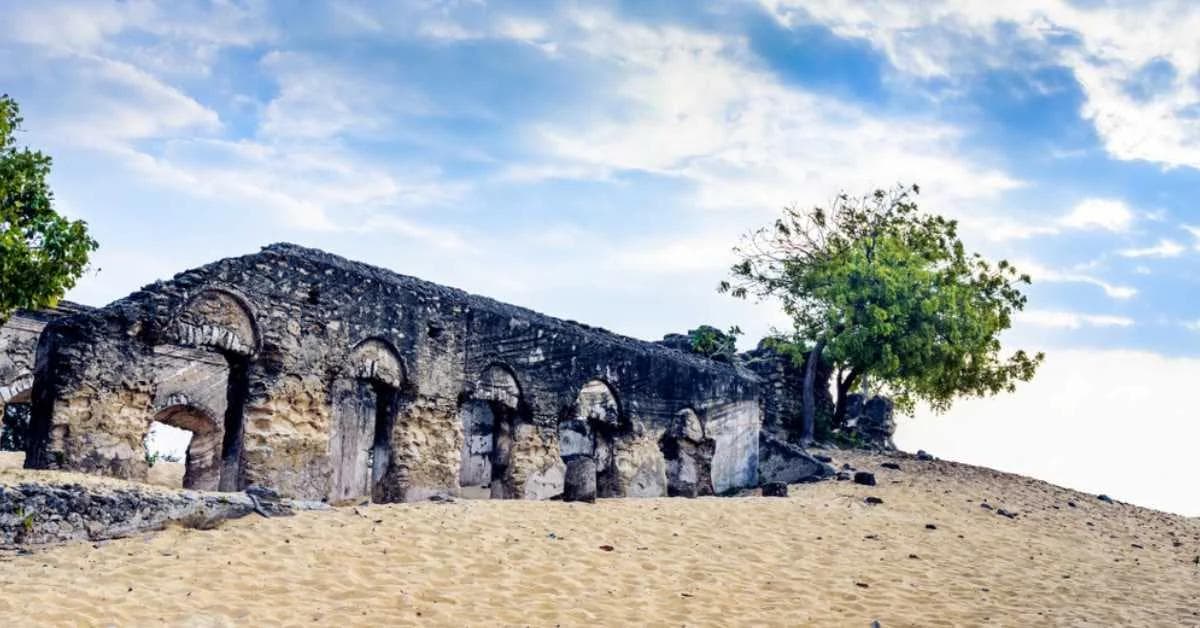
This is a mini-desert in the middle of the tropics. The landscape is covered in rolling hills of fine sand, sparsely populated by hardy Casuarina trees. It looks completely different from the lush green rice paddies you see in the rest of the country. It is a hauntingly beautiful, quiet landscape where the sand often spills over onto the tarmac road.
The Town of Point Pedro
Point Pedro isn't just a cape; it is a busy, functioning port town. It feels different from Jaffna town. The streets are narrower, and you will see plenty of colonial-era houses with intricate arched verandahs and wooden doors, hinting at its history as a trading hub.
It is a great place to stop for a cold drink or a snack before you make the return drive. The vibe here is industrious and local fishermen hauling nets, traders moving goods, and buses honking through the intersection.
Practical Tips for the Road Trip
- Sun Protection: This is one of the most exposed parts of the island. The sun at the cape is intense. Bring a hat and plenty of water, as there are no shops at the cape itself.
- Swimming: The water at Sakkotai Cape is rough and rocky. It is not safe for swimming. If you want to swim, head back towards Casuarina Beach or Munai Beach nearby.
- Transport: The best way to do this trip is by renting a scooter or hiring a tuk-tuk for the day. It is about a 30-45 minute drive from Jaffna town.
Why Make the Drive?
Visiting Point Pedro isn't about "doing" much. It is about the feeling of arrival. Standing next to that flag-painted sign, with the entire island of Sri Lanka behind you and the vast ocean in front of you, gives you a true sense of the scale and diversity of this beautiful country.
Enjoyed this story? Share it
About the Author
Tharushi Amarasinghe
A passionate cultural explorer and travel storyteller dedicated to uncovering the grand temple festivals, historic heritage sites, serene island landscapes, and the vibrant spirit of Jaffna — the jewel of Sri Lanka's northern coastline.