Walking the Ramparts: A Sunset Guide to the Jaffna Fort

Tharushi Amarasinghe
Safari Writer

If you look at a map of Jaffna, you will see a massive star shape jutting out into the lagoon. This is the Jaffna Fort.
For centuries, this structure has been the guardian of the city. Built by the Portuguese in 1618, expanded by the Dutch in 1680, and occupied by the British, it is one of the best-preserved colonial forts in Asia. But for the modern traveler, it is more than just a history lesson. It is the best place in the entire city to watch the sunset.
The Best Time to Visit: The Golden Hour
Do not visit the Fort at noon. The heat radiating off the coral masonry and the lack of shade make it punishingly hot.
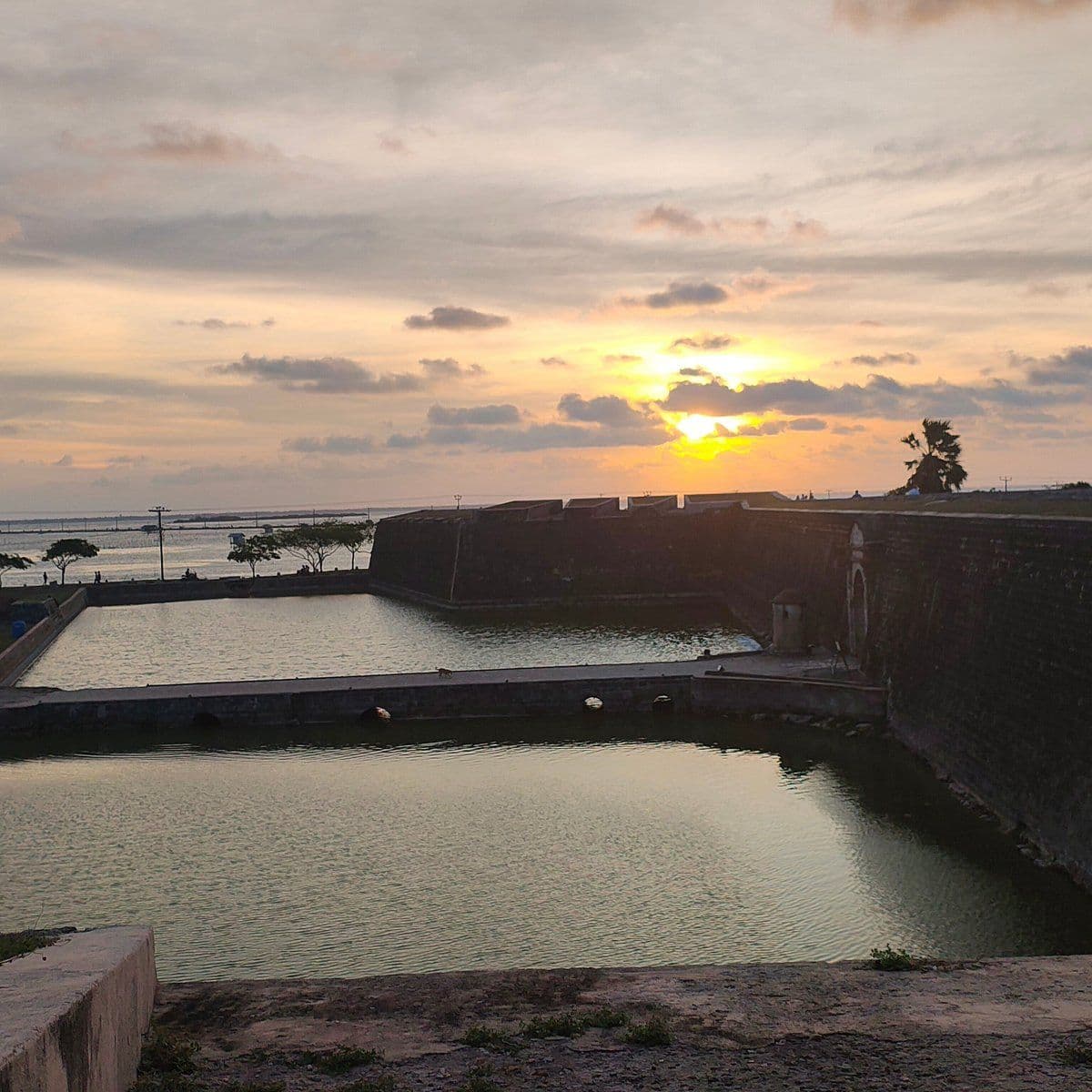
The secret is to arrive around 4:30 PM or 5:00 PM. By this time, the fierce Northern sun begins to soften. The air cools down as the breeze picks up from the lagoon. This is "Golden Hour," where the harsh grey stones turn a warm, honey-gold color perfect for photography.
The Walk: A Circuit of History
Unlike many museums where you are trapped behind glass, the Jaffna Fort is an open experience. The main activity here is walking the ramparts—the wide, grassy tops of the thick outer walls.
You can walk the entire perimeter. It is a peaceful loop that lifts you above the noise of the city. As you walk, you are treading on history. These walls have withstood sieges, tsunamis, and a thirty-year civil war. The scars of the war are still visible in the pockmarked stones, a silent reminder of what this city has endured.
The Views: City vs. Lagoon
The beauty of the Fort is that it offers two completely different views.
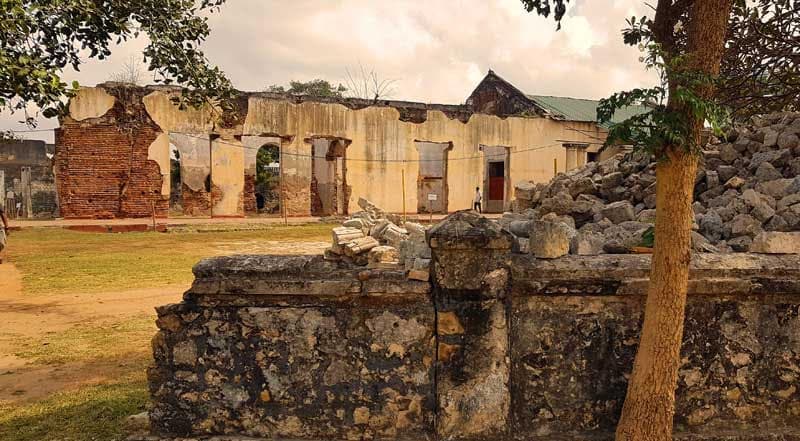
Look inward, and you see the skeleton of the old city. You can see the ruins of the King’s House and the Dutch Church, currently being slowly conserved. Look further, and you get a stunning framed view of the gleaming white Jaffna Public Library and the clock tower.
Look outward, and you face the vast Jaffna Lagoon. You can see fishermen waist-deep in the water, setting their traps. You see the causeway stretching out across the flat, calm water. It is one of the most serene sights in Sri Lanka.
The Tunnel and The Moat
Before you leave, make sure to explore the entrance properly. You cross a bridge over a moat that is often filled with green water and sometimes, a few lazy monitors swimming about.
Inside the main gate, there is a small exhibition room (often closed, but sometimes open) displaying artifacts found during the restoration. There are also dark tunnels and powder magazines built into the thick walls that you can peek into though they are often home to bats!
Realistic Tips for Travelers
- Footwear: Wear comfortable shoes or sandals with a strap. The ramparts are grassy and uneven. There are no safety rails on the edges, so if you are traveling with children, keep a close eye on them.
- The Ticket: Entrance is technically free for locals, but there is usually a small fee for foreign tourists. The ticket counter is near the main gate.
- Crowds: On weekends, the Fort fills up with local families flying kites and eating ice cream. If you want a romantic, quiet walk, try a weekday evening.
- No Facilities: There are no cafes or shops inside the Fort walls (only outside). Bring your own water bottle.
Why You Can't Miss It
In a city that is often bustling and dusty, the Fort is a breathing space. It is where Jaffna comes to exhale. Sitting on the edge of the rampart, legs dangling over the side, watching the sun dip into the lagoon while the sky turns purple, is a moment of pure magic. It is free, it is beautiful, and it is the perfect end to a day in the North.
Enjoyed this story? Share it
About the Author
Tharushi Amarasinghe
A passionate cultural explorer and travel storyteller dedicated to uncovering the grand temple festivals, historic heritage sites, serene island landscapes, and the vibrant spirit of Jaffna — the jewel of Sri Lanka's northern coastline.