What is Jaffna Kool? The Seafood Soup You Can Only Get in the North

Lily Anderson
Safari Writer
If you think you know seafood soup, think again. In the rest of the world, seafood soup is often a light, clear broth. In the South of Sri Lanka, it might be a coconut-based curry. But in Jaffna, it is something entirely different. It is called Kool.
Kool is not just a dish; it is an event. It is arguably the most authentic, indigenous dish of the Northern Peninsula. You will rarely find it on a standard restaurant menu, and you will almost never find it outside of the North. It is thick, fiery, complex, and messy. If you are a seafood lover, leaving Jaffna without trying it is a mistake.
The Secret Ingredient: Odiyal
What makes Kool different from a bouillabaisse or a chowder? The answer lies in the Palmyrah tree.
The base of this soup is thickened not with cornstarch or cream, but with Odiyal flour. Odiyal is the dried root of the Palmyrah palm. It has a distinct, slightly bitter, earthy flavor. When mixed with water and cooked, it turns the soup into a thick, gelatinous broth that coats the back of a spoon.
This flour is the soul of the dish. Without Odiyal, it is just seafood soup. With Odiyal, it becomes Kool.
A Bowl Full of the Ocean
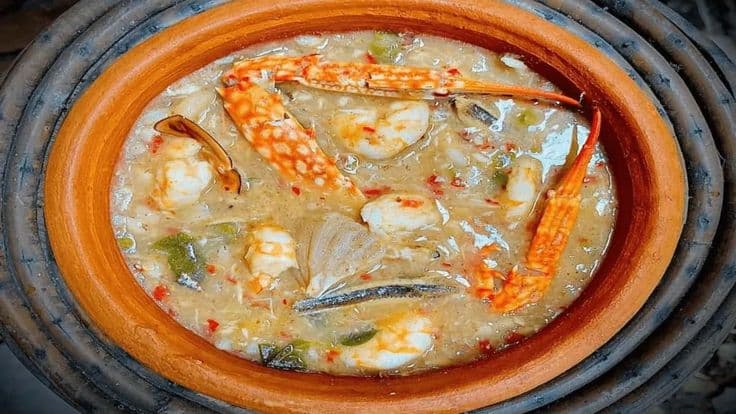
The beauty of Kool is that it utilizes whatever the fishermen caught that morning. A proper bowl is a treasure hunt of marine life. You will typically find blue swimmer crabs, prawns, cuttlefish (squid), and crayfish swimming in the brown gravy.
But it isn't just protein. The soup is bulked out with vegetables that add texture and sweetness to balance the spice. You will find chunks of manioc (cassava), long beans, and jackfruit seeds. The result is a meal that is heavy and filling—you do not need rice or bread to go with it. One bowl is usually enough to put you to sleep.
The Flavor Profile
The first spoonful of Kool hits you with heat. It is heavily spiced with roasted red chili and black pepper. Then comes the sourness, usually from tamarind, which cuts through the heavy seafood taste. Finally, you get the earthy, nutty undertone of the Odiyal flour.
It is a rustic flavor. It tastes like the village. It tastes like the lagoon.
The Challenge: Where to Find It?
This is the tricky part. Kool is traditionally a home-cooked meal, usually made on weekends or for special family gatherings. It takes hours to prepare—cleaning the crabs, preparing the vegetables, and getting the consistency of the flour right.
Because it is so labor-intensive, most "fast food" spots in Jaffna do not serve it. However, you do have options if you know where to look:
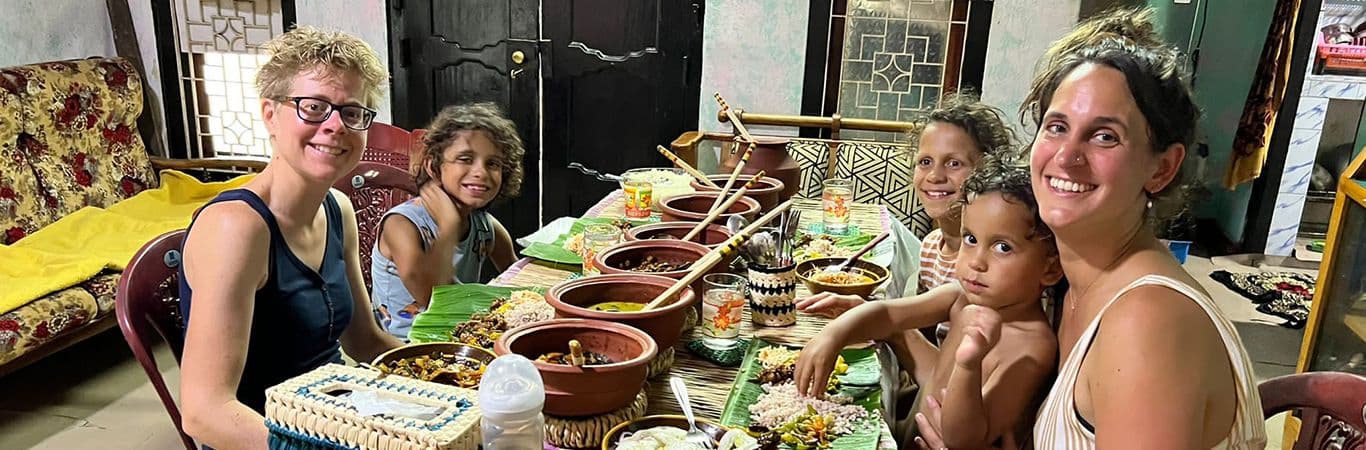
Guest Houses & Home Cooks: The best way to try Kool is to ask your guest house owner or hotel host. Many small family-run guesthouses will happily make it for you if you give them 24 hours' notice. This is often the best version you will taste because it is homemade.
Pre-Order Restaurants: Some larger restaurants in Jaffna town will prepare it for lunch, but only if you order it the day before. Places like Mangos or Green Grass sometimes have it, but it is rarely a walk-in item.
How to Eat It
Forget table manners. Kool is served piping hot, and because it contains whole crabs and prawns in their shells, you have to use your hands.
You sip the thick spicy broth from the edge of the bowl or with a spoon, and then you pick up the crab claws with your fingers to suck out the meat. It is a slow, tactile process. Your lips will burn from the chili, and your fingers will get sticky.
A Realistic Tip for Travelers
If you manage to order Kool, ask the cook to tone down the spice slightly if you are not used to Jaffna heat. The Odiyal flour retains heat (temperature) for a long time, and the combination of scalding hot soup and high chili content can be overwhelming for beginners.
Why It’s Worth the Hunt
Tracking down a bowl of Odiyal Kool takes a little more effort than walking into a cafe. You have to ask around, make a phone call, or place an order in advance. But that effort is part of the travel experience. When you finally sit down to that dark, steaming bowl, you are tasting a recipe that has survived war, displacement, and change. It is the resilient, delicious taste of Jaffna survival.
Enjoyed this story? Share it
About the Author
Lily Anderson
A passionate cultural explorer and travel storyteller dedicated to uncovering the grand temple festivals, historic heritage sites, serene island landscapes, and the vibrant spirit of Jaffna — the jewel of Sri Lanka's northern coastline.